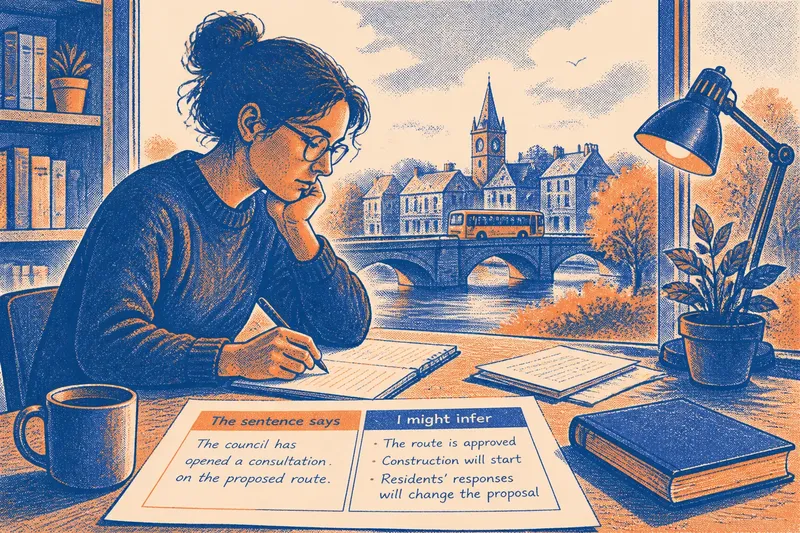
A Slower Scroll Through a Busy Feed
A slower scroll through a busy feed helps you judge whether to share, save, check or ignore a post before its urgency shapes your decision.
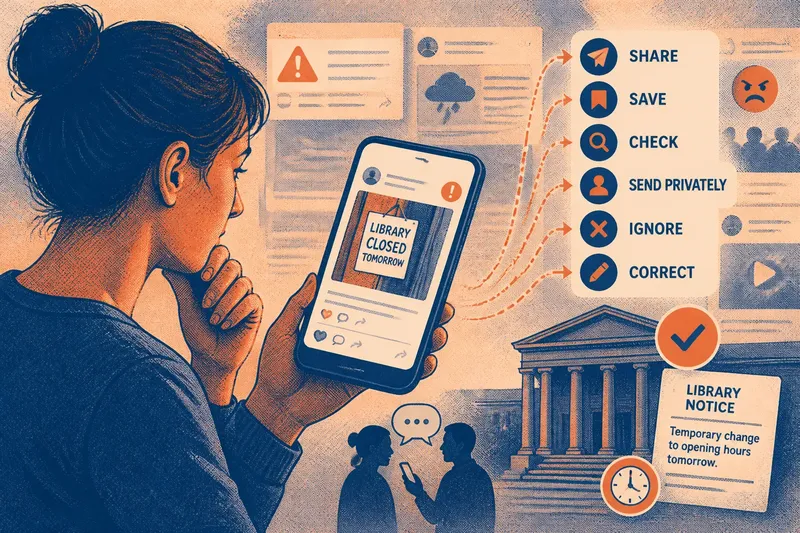
The common mistake with a surprising post is treating the urge to share as evidence that it matters. A slower scroll through a busy feed gives you a chance to decide what to do with the post before its urgency captures someone else’s attention too.
Choose an action before you start checking
Do not turn every striking post into a research task. First decide whether it calls for any action from you: share it, save it for later, check it, send it privately to someone who needs it, or leave it alone.
Use the likely consequence to set your threshold. A claim that could affect someone’s travel or safety deserves a more careful decision than a vague opinion that changes nothing you plan to do. If the post is unlikely to affect a choice or help someone, scrolling past it is a sound use of your attention.
Think of your feed like a crowded noticeboard. You do not need to read every sheet; you need to notice which one calls for action and whether it gives enough information to act sensibly.
Match your next move to the post’s stakes
Choose one of these responses before opening a chain of tabs:
- Share: If the post gives a clear, useful claim and a suitable source supports the detail you plan to pass on, share it with that context; otherwise choose another action.
- Save: If the claim may matter but you cannot check it now, save the original post and revisit it when you can; if it will not affect a later decision, move on instead.
- Check: If the claim could change an immediate choice, find a source suited to that choice; if no relevant source is available, do not present the claim as settled.
- Send privately: If one person needs a timely notice, send it directly with any uncertainty stated; if it could help a wider group, verify the details before posting publicly.
- Ignore: If the post is vague, low-stakes or designed mainly to provoke, leave it unshared; if a concrete claim emerges, assess that claim on its own.
- Correct: If you have already shared something and a reliable source changes the picture, update or remove your post; if you cannot establish a correction, say what remains uncertain instead.
These are choices, not a ranking of how careful you are. A short pause can end with no further checking because the post is not worth the attention it demands.
Use the feed’s signals to decide whether to pause
Notice what is pulling you in: a warning, an angry caption, a familiar name, a striking image or a demand to pass the post on. That signal tells you why you noticed the item; it does not tell you whether its claim is reliable.
Look at the likely audience and consequence. If a post names a local service, asks people to change plans or could damage someone’s reputation, pause before sharing. If it is a personal reaction with no clear factual claim, you may not need to investigate it at all.
When a post feels urgent, check whether the urgency belongs to the information or to the wording. A current notice from the organisation responsible may call for quick action. A caption saying “share before it disappears” may simply be pressing you to spread it.
Which response fits this post?
When should I save a post instead of checking it now?
Save it if the claim could matter later but does not require an immediate decision. Keep the original source or link with it; if you cannot find it again or the issue has passed, do not forward a memory of the post as though it were confirmed.
When is a private message better than a public share?
Send a private message when one person needs a prompt, limited notice and you can state what is uncertain. If many people might rely on the claim, check it first and use wording that matches what the source actually supports.
What should I do if the post is urgent and the source is unclear?
Look for a current notice from the organisation responsible for the situation. If there may be immediate danger, contact the appropriate local emergency service rather than relying on a feed post to settle what to do.
Should I correct a post I have already shared?
If a suitable source shows that your wording was wrong or too broad, update or remove the post and make the correction visible to the same audience where possible. If you still cannot resolve the claim, clarify that uncertainty rather than quietly repeating it.
Work through the choice with one post
Say you see a post claiming that a neighbourhood library will close tomorrow, illustrated with a photograph of a notice on its door. Your starting inputs are the post, the image and the claim about a permanent closure; the intended action is to tell a neighbour who uses the library. You hold off on sharing, open the library’s own current notice, and find that it describes a temporary change to opening hours rather than a permanent closure. The resulting decision is to message your neighbour with the temporary change and not forward the closure claim; if the notice had not addressed tomorrow’s opening, you would have left the claim unshared and asked the library for clarification.
This is a decision about what the available information supports, not a verdict on every detail of the post. The practical question is whether the wording you pass on will help someone make a better-informed choice.
Keep the pause tied to a useful decision
When a post catches your attention, name the action you are considering and the consequence it could have. Then choose whether to share, save, check, message privately or move on. If you do check, use a source relevant to that action and keep your wording within what it supports.
A slower scroll through a busy feed works best when it limits what you ask of your attention. Before passing a claim along, ask whether someone needs it, what decision it could affect and whether your chosen wording gives them enough context to act without overstating what is known.