Named Source or Firsthand Account? How to Weigh Both
Named source or firsthand account? Learn to match each source’s access and evidence to a claim, so you can judge what it supports and what remains unknown.

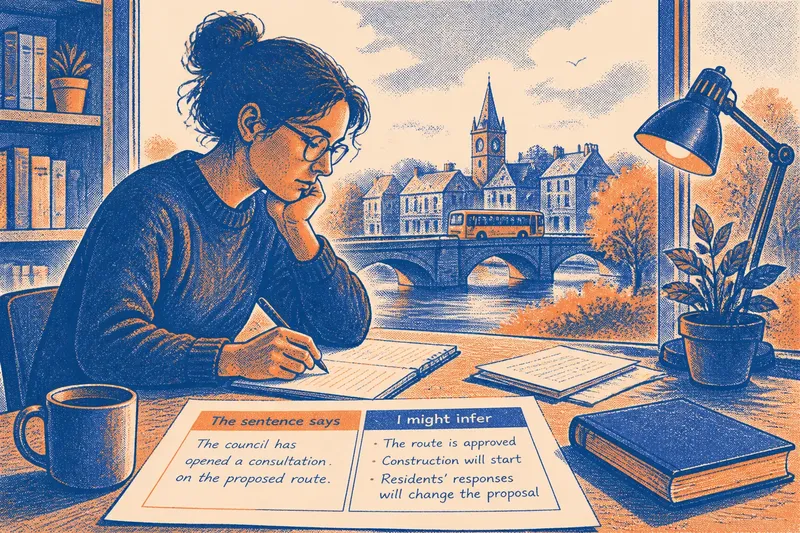
The common mistake with a named source or firsthand account is to treat the label as proof. That can leave you repeating a conclusion the source could not know, or dismissing a useful detail because the speaker is anonymous. Start instead with the precise point at issue and trace how the source could know it.
Match the source’s access to the exact claim
A named source is identifiable to the reader, often through a name, role or affiliation. A firsthand source describes something they personally saw, heard, did or experienced. One person can be both: a named witness may describe a meeting they attended.
Neither label tells you whether the source had access to every part of the claim. A council spokesperson may be able to state the council’s position but not independently confirm what happened in a room. A witness may recall a conversation but not know what decision-makers did afterwards.
Write the claim as a specific question, then identify the source’s route to the answer. Did they see the event, make the decision, inspect a record, receive a report from someone else or offer an interpretation? Keep those routes distinct. “I saw the notice” is different from “a colleague told me what it said”.
Separate direct observation from explanation
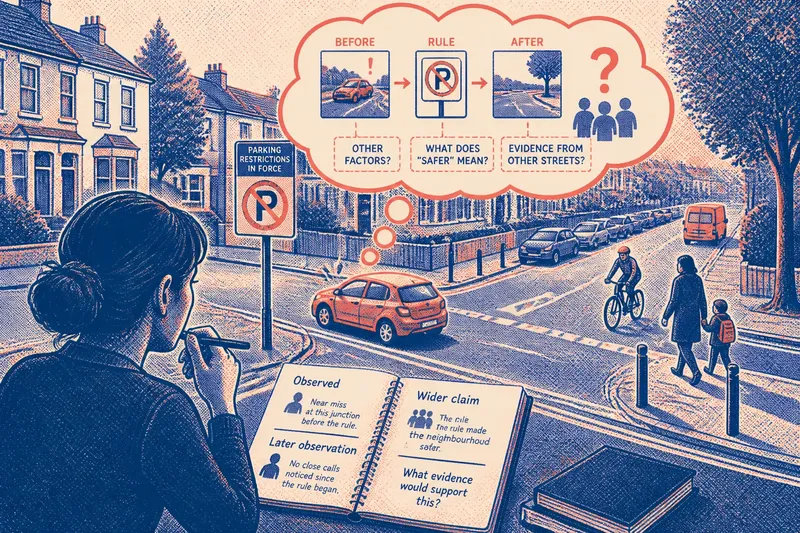
A source may provide a clear account of what they perceived while having limited grounds to explain why it happened. “I heard an alarm” describes a perception. “The alarm was ignored” adds a claim about what others knew and did. “The alarm caused the closure” adds a claim about cause.
For each sentence, ask what would have to be true for it to support the next inference. A witness’s account may support that an alarm sounded in their hearing. Establishing whether staff heard it, responded to it or closed a site because of it may require other accounts, records or expertise.
Look for the source’s own boundaries. They may say they arrived after an event began, could not see part of a room or are relying on a document they have not shared. Those limits help define the account; they are not reasons to dismiss it outright.
Use records to answer narrow questions
Documents, recordings and logs can clarify particular details, but they do not automatically settle the larger story. A log may record an official status at a given point. It may not show what a person could see, whether an entrance was accessible to everyone or whether the entry was accurate.
Check who created the material, what it records and what falls outside its purpose. A published procedure can show what an organisation says should happen. It cannot, by itself, show that staff followed it during a particular event. A recording may show a visible action while leaving what happened before or after it unknown.
When a source refers to material you cannot inspect, describe that accurately: the source says the record supports the claim. Do not present the record’s contents as independently confirmed unless you have access to them.
Keep conflicting accounts in their proper scope
When sources disagree, first make each account as narrow and fair as possible. “I did not see the door open” does not mean “the door never opened”. “The log lists the entrance as open” does not mean “every passenger could enter”.
Compare the details that may explain the difference: time, location, viewpoint and the meaning of key words. One person may describe a doorway at a particular moment; another may describe the station’s recorded operating status. Those accounts may address different questions rather than directly contradicting each other.
Imagine a transport manager cites a station log showing an entrance listed as open during a disruption. A passenger says they could not get in at a particular entrance. The manager’s record may support what the system listed; the passenger’s account supports their experience at that place and time. Together, they still leave open whether access was available throughout the disruption. The next useful material would need to address that specific question, such as records or observations tied to the entrance and time in dispute.
Consider identity, interests and accountability without guessing
A source’s role can help you understand what they know and why they are speaking. An official may be responsible for explaining an organisation’s position and also represent an institution with an interest in the account. A witness may have no formal role yet still have personal reasons or limited recall.
Look for concrete context: is the person speaking for themselves or an organisation, do they describe how they know the information, and can their account be checked? Anonymity may protect someone’s privacy or safety, but it can make their background and access harder for readers to assess. Neither a name nor anonymity settles whether a claim is true.
Do not infer dishonesty from an interest, or accuracy from a senior title. Keep the assessment focused on the evidence available and on what could resolve the uncertainty.
What can a named source or firsthand account establish?
Does a named source make a statement more reliable?
A name can help you assess a person’s role, expertise and possible interests. Reliability still depends on their access to the relevant information, the basis for the statement and whether it can be checked.
Is a firsthand account stronger than an official statement?
A firsthand account may be more relevant to what a person directly experienced, while an official statement may describe an organisation’s recorded position. Compare each with the precise question rather than ranking the labels.
Can an anonymous person provide useful evidence?
Yes. An anonymous person may have direct knowledge, particularly where identification could expose them to harm. Look for a clear account of how they know and for other material that can address the same point.
What should I do when two sources disagree?
State each account narrowly, then compare its time, place, viewpoint and terms. If the conflict remains, say so and seek evidence that bears directly on the disputed detail.
Choose wording that fits what the sources support
Before sharing a claim, note the source, their access, the basis of the statement, its scope and what remains unresolved. Then choose wording that matches that evidence: “the witness said”, “the document records” or “the available accounts do not settle” may be more accurate than stating a broad conclusion as fact.
Say you are writing about a building entrance during a reported disruption. Your starting information is a named manager’s statement that the operating log listed it as open, plus a passenger’s account that they could not enter at a particular time. First, keep the log’s status separate from the passenger’s experience. Next, note that neither account alone covers the entrance’s availability throughout the disruption. Your resulting wording could be: “The manager said the log listed the entrance as open; a passenger reported being unable to enter at a particular time. These accounts do not establish whether access remained available throughout the disruption.” If a record tied to the passenger’s time later becomes available, it may clarify that narrower point without automatically resolving the whole period.
For a named source or firsthand account, the useful question is not which label wins, but what each source can contribute to this particular claim. Keep that distinction visible when new material appears; it makes it easier to revise one part of your account without overstating the rest.